By Diane Manning
Photos by : Diane Manning
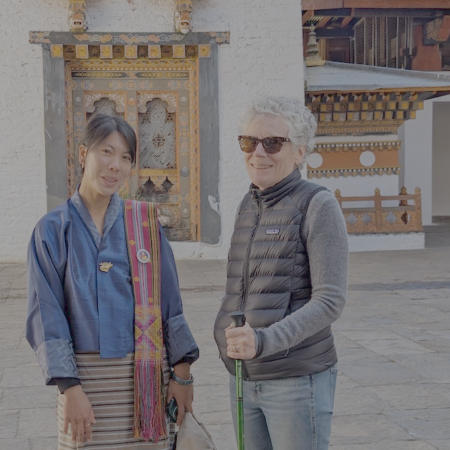
Feature image: Diane with her fabulous guide Drime Zangmo.

I have wanted to visit Bhutan ever since it opened its doors to tourism in 1974. I was drawn by the “Shangri-la” allure of this remote Buddhist kingdom on the southern slopes of the eastern Himalayas that considers Gross National Happiness more important than Gross National Product. It remained on my must-visit list for decades, but there was always another destination that beckoned first.
Fast forward many years to 2022, when I joined WARP’s Artisan Support Grants Committee. That year, we awarded our first grant to an artisan from Bhutan. Stay tuned for Part 2 of this blog post where I will talk in more detail about this grantee, Rinzin Wangmo of Leki Textiles.
This year, we awarded our second grant ever to an artisan group from Bhutan. Karma Dema of Druk Vana was awarded $1,000 to purchase raw materials, wood for loom construction and repair, and a camera for storytelling and promotion, and to offer training on advanced weaving techniques and business skills.
When my husband and I were invited recently to a wedding in India and Nepal, I remembered that Bhutan was only a short flight from Kathmandu. This was our chance to finally get there and, at the same time, meet two WARP grantees in person; I grabbed it!
Our first destination in Bhutan was Thimphu, the capital and home of Druk Vana. The city is a textile lover’s dream, from the Royal Academy of Textiles, which serves as a national center for preserving weaving traditions, to its Bhutanese Crafts Bazaar. I was immediately struck by the sight of residents going about their daily business in gorgeous, intricately designed, hand-woven clothing that seemed to outnumber Western attire. Our guide explained that in 1989, the gho (a knee-length robe for men) and the kira (a vibrant, wrapped ankle-length dress for women), both of which have been worn for centuries, were proclaimed Bhutan’s national dress to be worn in schools, offices, and temples, as well as at their festivals—a potent expression of the country’s identity and the importance of its textile heritage.
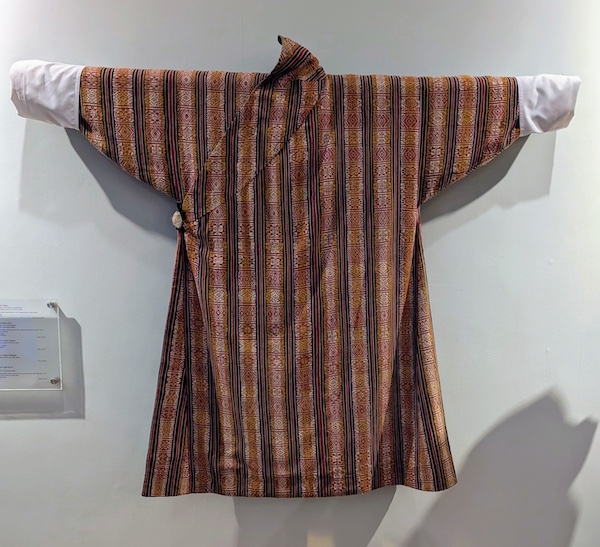
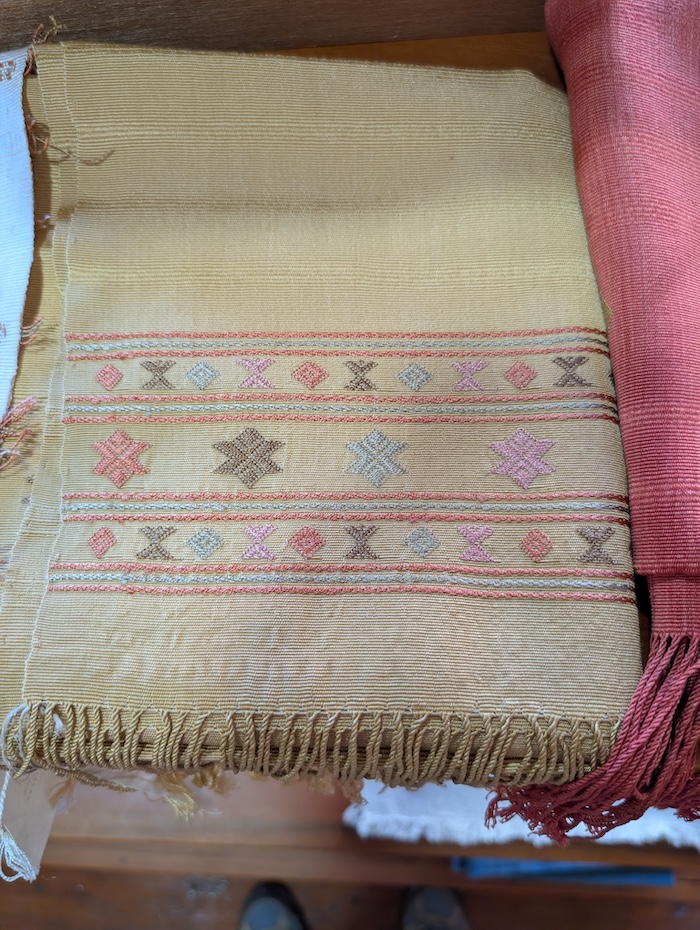
(supplementary warp)
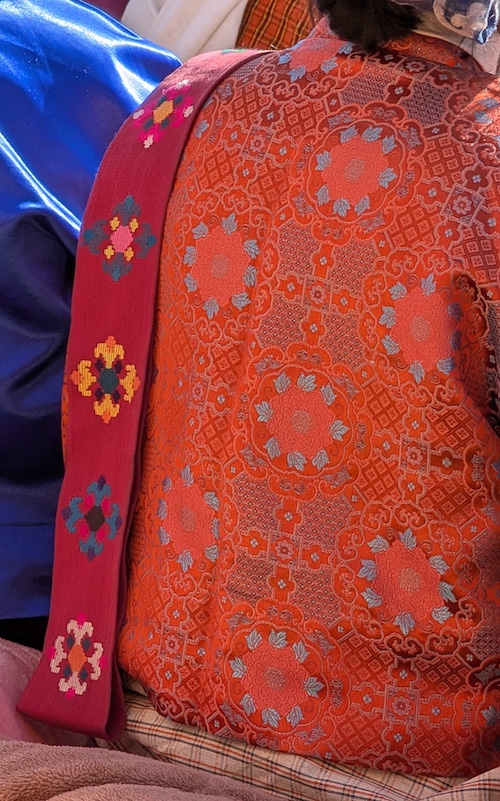
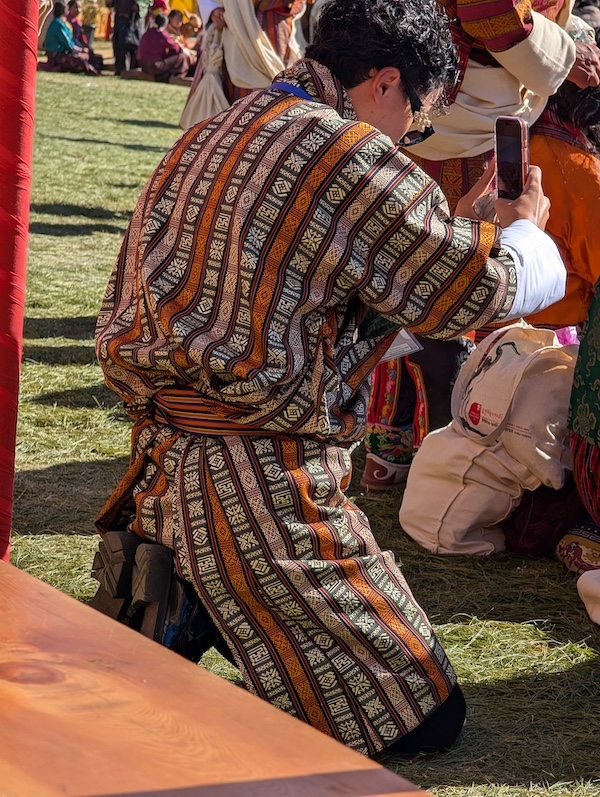
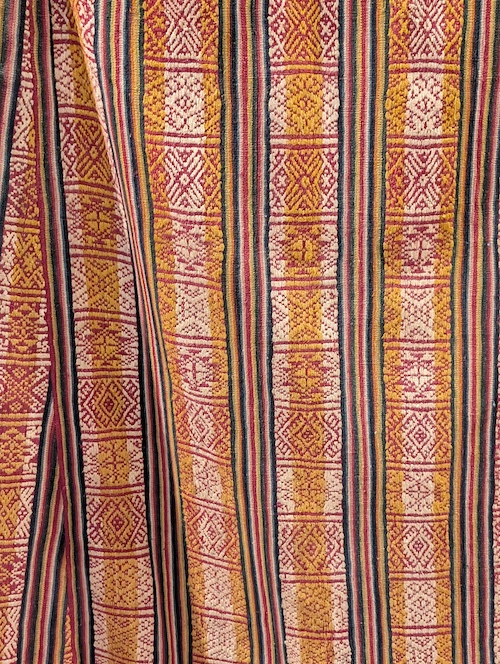
This heritage is rooted in Thagzo, the art of weaving, which is one of the thirteen traditional crafts (Zorig Chosum) of the kingdom. As Diana K. Myers notes in her seminal book on Bhutan’s textiles, From the Land of the Thunder Dragon, the nation’s intricate brocades and complex warp-striped patterns constitute one of the world’s great textile traditions, utilizing sophisticated techniques that seem to defy the logic of a simple backstrap loom.
With this context in mind, we set out to see how the next generation of artisans is carrying these traditions forward. My husband and I arrived at Druk Vana on a brisk, sunny afternoon and were met by Karma Dema, Druk Vana’s Sr. Social Enterprise Officer
Druk Vana occupies a beautiful, traditionally decorated building in Thimphu, including a shop, a display area for new initiatives, and a weaving studio with room for backstrap, two-pedal Gujarati, and four-pedal traditional Bhutanese looms. They currently employfive weavers in Thimphu, plus 20 home-based weavers. They plan to add 40 trained weavers by 2028.
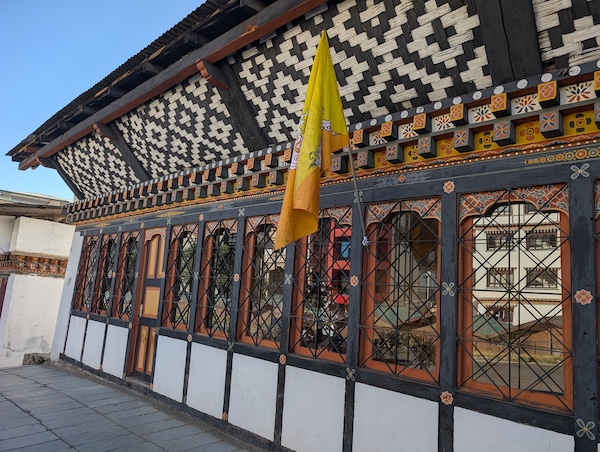
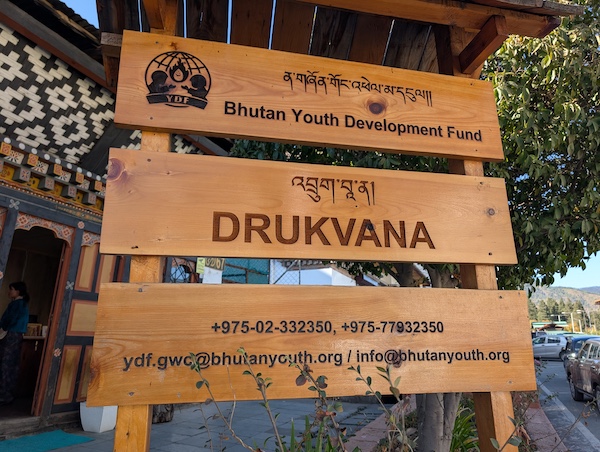
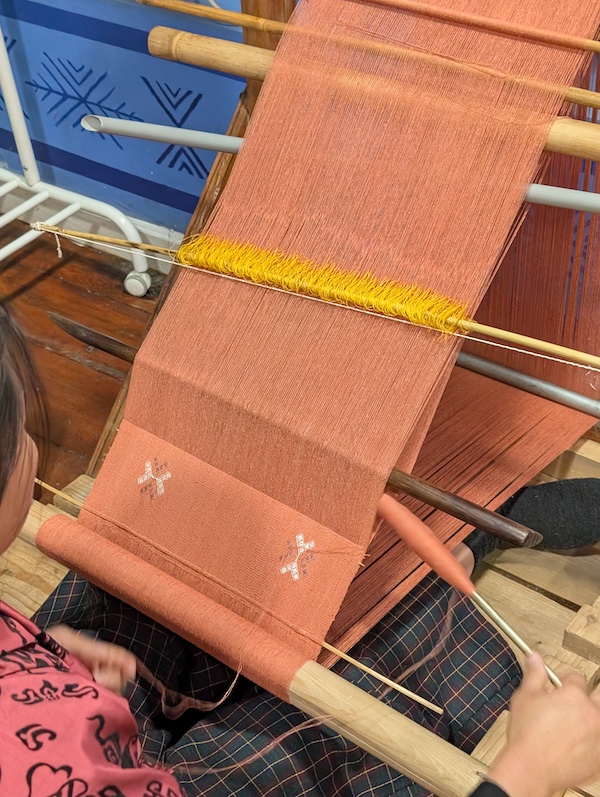
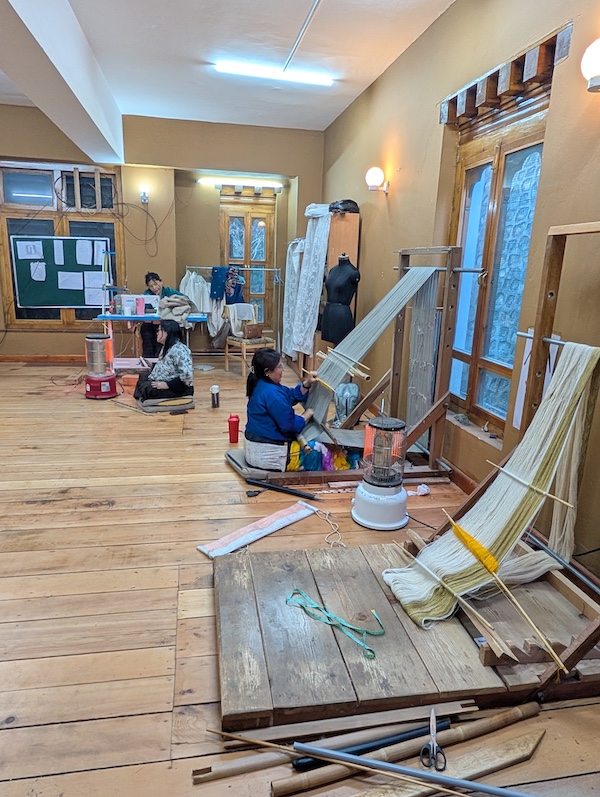
Established in 2020 as an initiative of Bhutan’s Youth Development Fund, Druk Vana fosters modern education and cultural preservation while providing meaningful employment for youth. The name—combining Druk (meaning Bhutan) and Vana (the Sanskrit word for forest)—along with their tagline, “Forest to Fabric,” captures their mission to create sustainably crafted textiles while training a new generation of artisans.
Druk Vana produces a variety of items, including scarves, shawls, bags, and home decor accessories. Raw materials range from highland sheep and yak fiber to rare forest cotton, indigenous nettle, and Eri silk. They primarily use natural dyes such as madder, indigo, onion shell, and artemesia, harvested from an onsite garden or foraged locally. Several of their creations have even won a “Seal of Quality” award from the royal government of Bhutan.
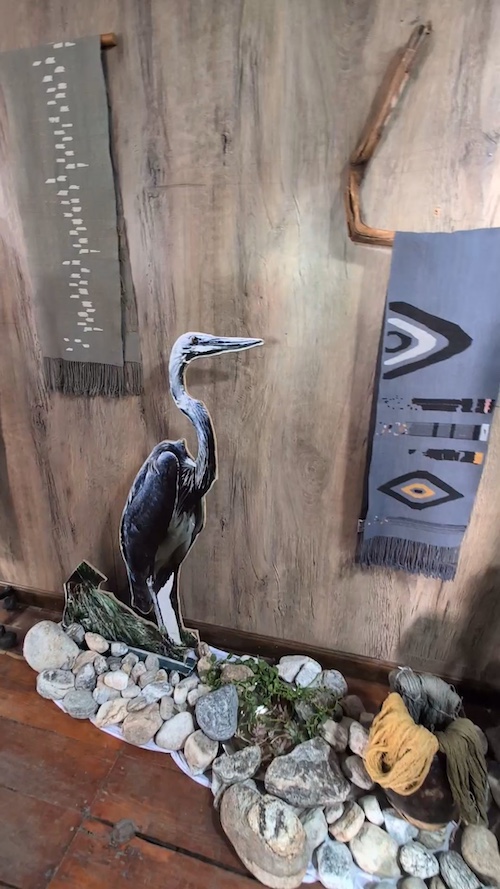
In the display room, we saw some of their newest projects. One of the most interesting was the Bioacoustic Collection, a first-of-its-kind concept and a commemoration of Bhutan’s Fourth King’s 70th birthday. It captures the unique calls of birds—such as the revered but endangered black-necked crane—through sonograms, which are then translated into woven textile designs.
We also saw several research and development projects, including bags, placemats, and even a hammock crocheted from yak wool as part of a collaboration with a Nepali trainer. Another standout was a gorgeous shawl woven on a Gujarati loom but featuring intricate, traditional Bhutanese motifs.
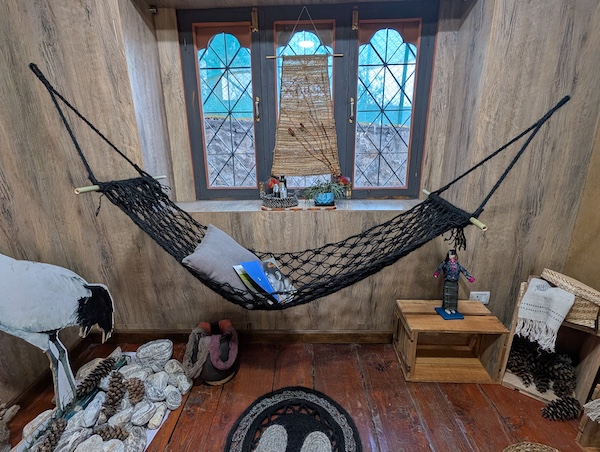
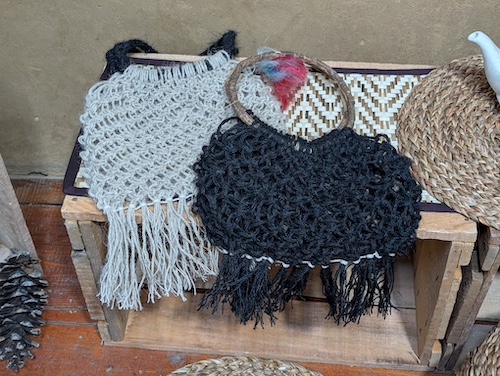
Crocheted yak wool bags, par of a collaboration with a Nepal trainer
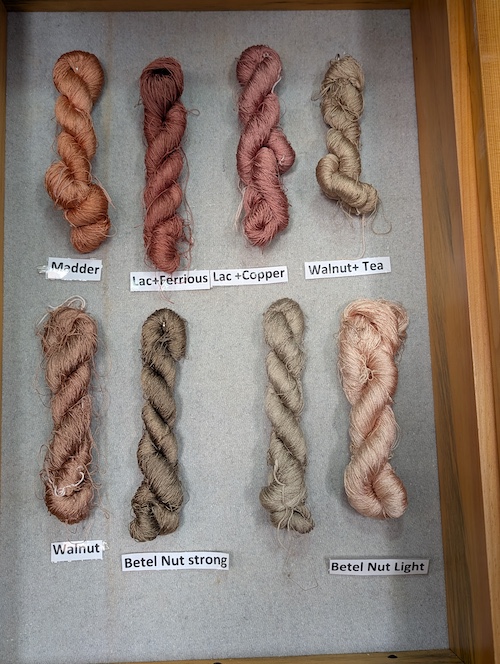
In the studio, we watched the weavers at work and chatted with master weaver Aum Wangmo, who has been weaving for over 50 years and who told us that “it’s in my loom where I find myself.” Aum never went to school, but thanks to her weaving income she was able to educate her three children—now a teacher, a hotel manager, and an engineer.
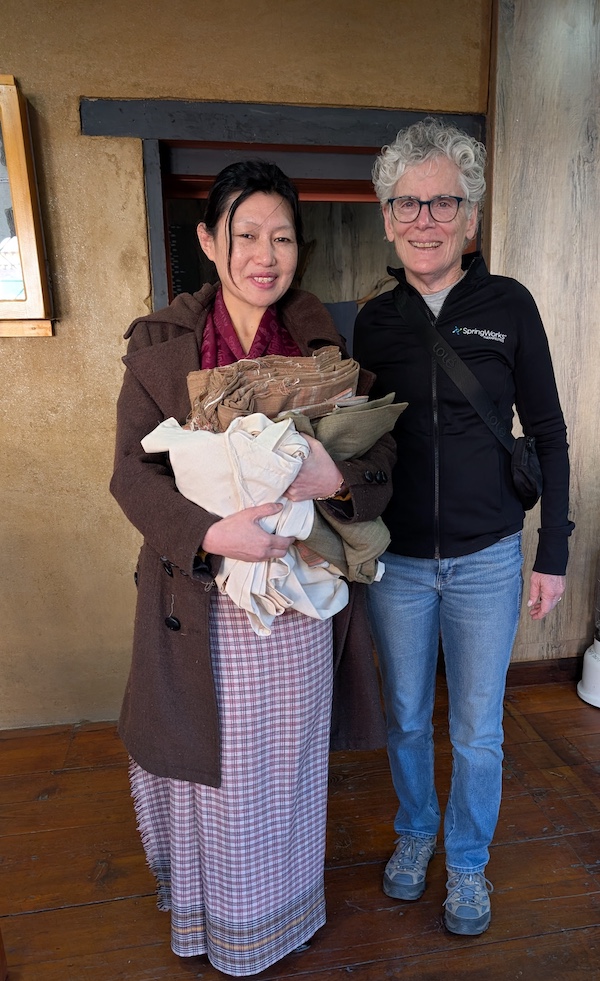
Karma and Diane (she’s holding some fabric she brought to the shop from the studio)
Finally, I had a lengthy conversation with Karma and her Marketing Officer, Tenzin Pelzang, about how their grant is progressing and their vision to become a globally recognized “eco-fashion” brand that blends traditional Himalayan aesthetics with eco-conscious practices. They are young, enthusiastic, and full of plans for the Centre!
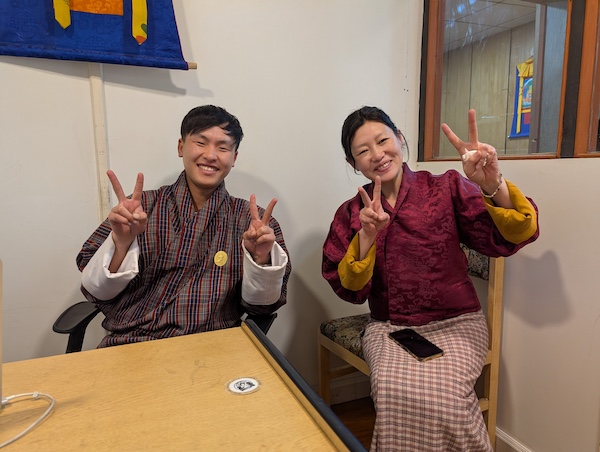
I am grateful to WARP for the opportunity to meet one of our amazing grantees in person. I didn’t purchase everything in the store, but I did leave with a beautiful, naturally dyed scarf designed and woven by Aum Wangmo herself!
Stay tuned for Part 2, where I share my visit with our other grantee, Rinzin Wangmo (no relation to Aum Wangmo).
DRUK VANA SOCIAL MEDIA: Instagram @drukvana // Facebook: DrukVana
Druk Vana Website: https://www.drukvana.com/
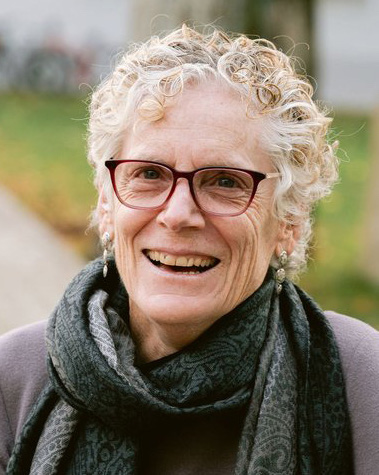
Diane Manning – Diane’s love affair with all things fiber was kindled when she spent a week in the Guatemalan highlands learning the basics of backstrap weaving from a Mayan weaver. This experience led to an enduring passion for learning about and collecting handmade crafts, especially textiles. Now retired from a high-tech marketing career, she spends much of her time (when not traveling) working with nonprofits that support her two main passions: 1) advancing the livelihood of artisans worldwide and helping to preserve the cultural heritage their craft embodies and 2) helping girls and women in underserved areas gain better access to education and technology.
Diane joined WARP in 2017. She currently serves as Co-Chair of the Board and is the Artisan Support Grants Committee administrator. She also recently joined the Board of the San Jose Museum of Quilts and Textiles in San Jose, California.
– SPANISH VERSION-
Las estrellas se alinearon: conocí a dos becarios de WARP durante un viaje único en la vida a Bután.

Por Diane Manning
Fotos por: Diane Manning
Foto de portada: Diane con su increíble guía Drime Zangmo.
He querido visitar Bután desde que abrió sus puertas al turismo en 1974. Me atraía el encanto de “Shangri-la” de este remoto reino budista situado en las laderas meridionales del Himalaya oriental, en dónde se considera que la Felicidad Nacional Bruta es más importante que el Producto Interno Bruto. Permaneció en mi lista de destinos imprescindibles durante décadas, pero siempre había otro lugar que me llamaba primero.
Ahora avancemos muchos años hasta 2022, cuando me uní al Comité de Subvenciones de Apoyo a Artesanos de WARP. Ese año otorgamos nuestra primera subvención a una artesana de Bután. Estén atentos a la Parte 2 de este blog, donde hablaré con más detalle sobre esta beneficiaria, Rinzin Wangmo, de Leki Textiles.
Este año, concedimos nuestra segunda subvención a un grupo de artesanos de Bután. Karma Dema, de Druk Vana, recibió 1.000 dólares para comprar materias primas, madera para la construcción y reparación de telares, y una cámara para narración y promoción, además de ofrecer formación en técnicas avanzadas de tejido y habilidades empresariales.
Cuando mi esposo y yo fuimos invitados recientemente a una boda en India y Nepal, recordé que Bután estaba a solo un corto vuelo desde Katmandú. ¡Era nuestra oportunidad de finalmente llegar allí y, al mismo tiempo, conocer en persona a dos beneficiarios de WARP; no dejé pasar esta oportunidad!!
Nuestro primer destino en Bután fue Thimphu, la capital y sede de Druk Vana. La ciudad es el sueño de cualquier amante de los textiles: desde la Real Academia de Textiles, que funciona como centro nacional para la preservación de las tradiciones del tejido, hasta su Bazar de Artesanías Butanesas. Me impactó de inmediato ver a los residentes realizando sus actividades diarias vestidos con prendas hermosas, intrincadamente diseñadas y tejidas a mano, que parecían superar en número a la vestimenta occidental. Nuestro guía explicó que en 1989 el gho (una túnica hasta la rodilla para los hombres) y la kira (un vestido vibrante, largo hasta los tobillos y envolvente para las mujeres), ambos usados desde hace siglos, fueron proclamados vestimenta nacional de Bután para ser usados en escuelas, oficinas y templos, así como en festivales: una poderosa expresión de la identidad del país y de la importancia de su herencia textil.
(Urdimbre suplementaria)
Este legado tiene sus raíces en el Thagzo, el arte del tejido, que es una de las trece artes tradicionales (Zorig Chosum) del reino. Como señala Diana K. Myers en su libro fundamental sobre los textiles de Bután, From the Land of the Thunder Dragon, los intrincados brocados y los complejos patrones de urdimbre rayada del país constituyen una de las grandes tradiciones textiles del mundo, utilizando técnicas sofisticadas que parecen desafiar la lógica de un simple telar de cintura.
Con este contexto en mente, nos propusimos ver cómo la próxima generación de artesanos está llevando estas tradiciones hacia el futuro. Mi esposo y yo llegamos a Druk Vana en una tarde fresca y soleada, y fuimos recibidos por Karma Dema, Oficial Principal de la Empresa Social de Druk Vana.
Druk Vana ocupa un hermoso edificio en Thimphu, decorado de manera tradicional, que incluye una tienda, un área de exhibición para nuevas iniciativas y un estudio de tejido con espacio para telares de cintura, telares gujarati de dos pedales y telares tradicionales butaneses de cuatro pedales. Actualmente emplean a cinco tejedoras en Thimphu, además de 20 tejedoras que trabajan desde sus hogares. Planean incorporar 40 tejedoras capacitadas para el año 2028.

Druk Vana produce una variedad de artículos, incluidos pañuelos, chales, bolsos y accesorios de decoración para el hogar. Las materias primas van desde fibra de ovejas de las tierras altas y yaks hasta algodón forestal poco común, ortiga autóctona y seda Eri. Utilizan principalmente tintes naturales como rubia, índigo, cáscara de cebolla y artemisa, recolectados de un jardín propio o obtenidos localmente. Varias de sus creaciones incluso han ganado el premio “Sello de Calidad” otorgado por el gobierno real de Bután.
En la sala de exhibición vimos algunos de sus proyectos más recientes. Uno de los más interesantes fue la Colección Bioacústica, un concepto único en su tipo y un tributo al cumpleaños número 70 del Cuarto Rey de Bután. Capturan los llamados únicos de las aves —como la venerada pero amenazada grulla de cuello negro— mediante sonogramas, que luego se traducen en diseños textiles tejidos.
También vimos varios proyectos de investigación y desarrollo, incluidos bolsos, manteles individuales e incluso una hamaca tejida a crochet con lana de yak como parte de una colaboración con un formador nepalí. Otro proyecto destacado fue un hermoso chal tejido en un telar gujarati, pero con intrincados motivos tradicionales butaneses.
En el estudio, observamos a las tejedoras en pleno trabajo y conversamos con la maestra tejedora Aum Wangmo, quien ha tejido durante más de 50 años y nos dijo: “Es en mi telar donde me encuentro a mí misma”. Aum nunca fue a la escuela, pero gracias a sus ingresos como tejedora pudo educar a sus tres hijos, de los cuales una de ellas es maestra, otro gerente de hotel y otro ingeniero.
Finalmente, tuve una larga conversación con Karma y su Encargado de Marketing, Tenzin Pelzang, sobre cómo avanza su subvención de WARP. Nos comentaron su visión de convertirse en una marca de “eco-moda” reconocida a nivel mundial, que combine la estética tradicional del Himalaya con prácticas ecológicas. ¡Son jóvenes, entusiastas y están llenos de planes para el Centro!
Estoy agradecida a WARP por la oportunidad de conocer en persona a uno de nuestros increíbles beneficiarios. No compré todo en la tienda, pero sí me fui con un hermoso pañuelo teñido naturalmente, diseñado y tejido por la propia Aum Wangmo.
Estén atentos a la Parte 2 de esta historia en un próximo blog, donde compartiré mi visita con nuestra otra beneficiaria, Rinzin Wangmo (sin relación con Aum Wangmo).
Redes sociales de DRUK VANA: Instagram @drukvana // Facebook: DrukVana
Página Web de Druk Vana : https://www.drukvana.com/
Diane Manning – El amor de Diane por todo lo relacionado con las fibras nació cuando pasó una semana en las tierras altas de Guatemala aprendiendo los fundamentos del tejido en telar de cintura de una tejedora maya. Esta experiencia dio lugar a una pasión duradera por aprender y coleccionar artesanías hechas a mano, especialmente textiles. Ahora, ya retirada de una carrera en marketing de alta tecnología, dedica gran parte de su tiempo (cuando no está viajando) a trabajar con organizaciones sin fines de lucro que apoyan sus dos principales pasiones: 1) impulsar los medios de vida de artesanos y artesanas de todo el mundo y ayudar a preservar el patrimonio cultural que encarna su oficio, y 2) ayudar a que niñas y mujeres en comunidades desatendidas tengan un mejor acceso a la educación y la tecnología.
Diane se unió a WARP en 2017. Actualmente se desempeña como copresidenta de la Junta Directiva y es la administradora del Comité de Subvenciones de Apoyo a Artesanos. También se incorporó recientemente a la Junta Directiva del Museo de Quilts y Textiles de San José, en San José, California.